Details
Reputable factory supply Ninhydrin hydrate 485-47-2 in bulk at low price
- Molecular Formula: C9H6O4
- Molecular Weight: 178.144
- Appearance/Colour: White to pale yellow crystalline powder
- Vapor Pressure: 9.83E-05mmHg at 25°C
- Melting Point: 250 °C (dec.)(lit.)
- Refractive Index: 1.4209 (estimate)
- Boiling Point: 449.3 °C at 760 mmHg
- PKA: 8.47±0.20(Predicted)
- Flash Point: 239.7 °C
- PSA: 74.60000
- Density: 1.714 g/cm3
- LogP: -0.25350
Ninhydrin hydrate(Cas 485-47-2) Usage
|
History |
Ninhydrin was discovered in 1910 by the German-English chemist Siegfried Ruhemann (1859–1943). In the same year, Ruhemann observed ninhydrin's reaction with amino acids. In 1954, Swedish investigators Oden and von Hofsten proposed that ninhydrin could be used to develop latent fingerprints. |
|
Reactions |
Ninhydrin reacts with primary and secondary amines (including amino acids, proteins, and peptides) to give a dark purple product known as Ruhemann's purple (RP) . As the eccrine component of a latent mark deposit contains amino acids, this reaction can be exploited as a means of developing fingermarks on porous surfaces such as paper and cardboard. The use of ninhydrin as a fingermark detection reagent was first proposed in 1954 by Odén and von Hofsten (1954). Since then, ninhydrin has become the most popular technique for fingermark detection on porous substrates. Eccrine glands secrete a range of different amino acids that may ultimately be present in a latent fingermark deposit (Hamilton 1965; Ramotowski 2001). Ninhydrin is a nonspecific amino acid reagent in that it reacts in the same manner with different amino acids. In this way, each amino acid present in the latent fingermark deposit will contribute to the developed fingermark image. Amino acids are stable compounds that, due to an affinity for cellulose, do not migrate to any significant extent through dry paper substrates. As a result, very old latent marks can be developed with ninhydrin (the development of 40-year-old marks has been recorded), and the revealed marks are normally of good quality. In addition, the amino acid composition of the eccrine secretion appears to remain relatively constant. Due to these qualities, the use of amino acid reagents (ninhydrin and ninhydrin analogs, including 1,8-diazafluoren-9-one [DFO]) constitutes an effective chemical technique for the development of latent fingermarks on paper surfaces. |
|
Synthesis Reference(s) |
Synthetic Communications, 24, p. 695, 1994 DOI: 10.1080/00397919408012648Tetrahedron Letters, 9, p. 6201, 1968 |
|
Air & Water Reactions |
Slightly soluble in water. |
|
Reactivity Profile |
Ninhydrin hydrate is sensitive to prolonged exposure to light. Ninhydrin hydrate yields highly fluorescent ternary compounds with aldehydes and primary amines. |
|
Hazard |
Irritant. |
|
Health Hazard |
Symptoms of exposure to Ninhydrin hydrate may include skin irritation and sensitization, and redness of the skin. ?ACUTE/CHRONIC HAZARDS: This compound causes irritation on contact. When heated to decomposition it emits acrid smoke and fumes. |
|
Fire Hazard |
Flash point data for Ninhydrin hydrate are not available. Ninhydrin hydrate is probably combustible. |
|
Synthesis |
The synthesis of?Ninhydrin hydrate is as follows:A sealed-pressurised reaction vessel (5mL) equipped with a magnetic stirrer was charged with indan-1-one (1equiv), selenium dioxide (3.1equiv) and dioxane/water (3mL/0.3mL). It was then irradiated in a Biotage Initiator Microwave synthesizer 2.0 440W with microwave heating to 180°C with a maximum of 400W for 5min. Then, the vessel was rapidly forced-air cooled to room temperature. The mixture was transferred into a round bottom flask, and the vessel washed with acetone. Silica was added to prepare a solid deposit. The volatile solvents were then evaporated in vacuo before purification by flash chromatography (ethyl acetate/cyclohexane) to afford the corresponding ninhydrin. |
|
Purification Methods |
Crystallise ninhydrin from hot water (charcoal). Dry it under vacuum and store it in sealed brown containers. [Beilstein 7 IV 2786.] |
|
Definition |
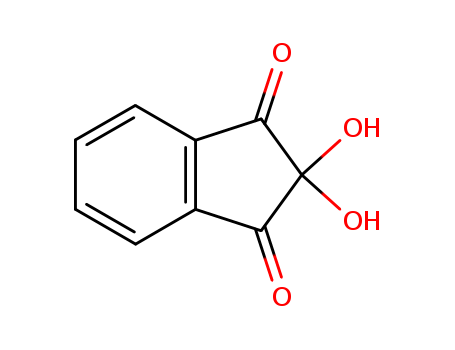
ChEBI: A member of the class of indanones that is indane-1,3-dione bearing two additional hydroxy substituents at position 2. |
|
General Description |
White to light yellow crystals or powder. Becomes anhydrous with reddening at 257-266°F. |
InChI:InChI=1/C9H4O3.H2O/c10-7-5-3-1-2-4-6(5)8(11)9(7)12;/h1-4H;1H2
485-47-2 Relevant articles
Optimization of ninhydrin reagent synthesis from 1,2,3,4-tetrahydro-1,4-dioxo-2,2,3,3-tetrahydroxynaphthalene (oxolin) and possible applications
Zenkova,Degterev
, p. 135 - 137 (2000)
-
Microwave-assisted oxidation of indan-1-ones into ninhydrins
Marminon, Christelle,Nacereddine, Abdelhamid,Bouaziz, Zouhair,Nebois, Pascal,Jose, Joachim,Le Borgne, Marc
supporting information, p. 1840 - 1842 (2015/03/30)
A simple and general microwave-assisted ...
Facile synthesis of 1,2,3-tricarbonyls from 1,3-dicarbonyls mediated by cerium(IV) ammonium nitrate
Sivan, Akhil,Deepthi, Ani
supporting information, p. 1890 - 1893 (2014/03/21)
A mild and efficient protocol for the sy...
PAR4 AGONIST PEPTIDES
-
Page/Page column, (2013/11/06)
The present invention provides PAR4 agon...
DIVERGENT SYNTHESIS OF LOOPED POLY(ESTER)-AND POLY(ETHER)-SUBSTITUTED DENDRONS AND DENDRIMERS
-
, (2010/04/30)
The present invention describes a proces...
485-47-2 Process route
-

-
872785-94-9
2-iodo-2-nitro-indan-1,3-dione

-
-
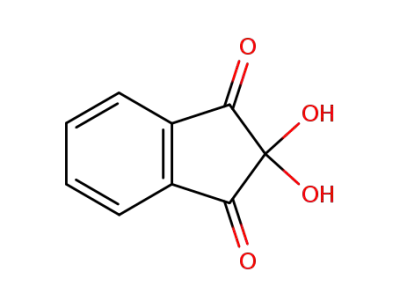
485-47-2
indan-1,2,3-trione hydrate

-
-
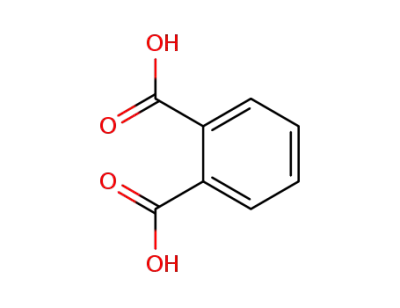
88-99-3,73607-73-5
benzene-1,2-dicarboxylic acid
| Conditions | Yield |
|---|---|
|
at 145 - 165 ℃;
anschliessend Behandeln mit Wasser;
|
-

-
623-11-0
1-methyl-4-nitrosobenzene
-
-
605-37-8
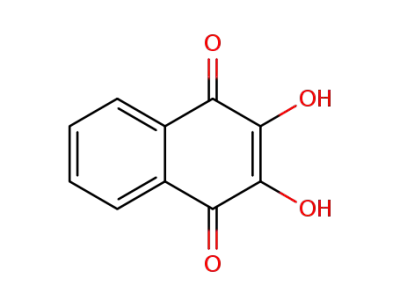
isonaphthazarine
-
-
485-47-2
indan-1,2,3-trione hydrate
-
-
528-46-1
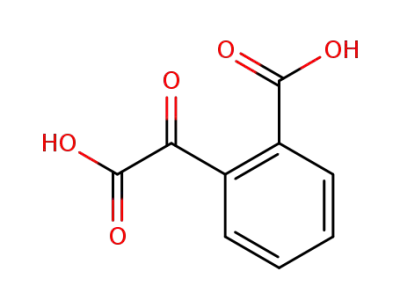
phthalonic acid
-
-
88-99-3,73607-73-5
benzene-1,2-dicarboxylic acid
-
-
708-14-5,62283-01-6,99266-05-4
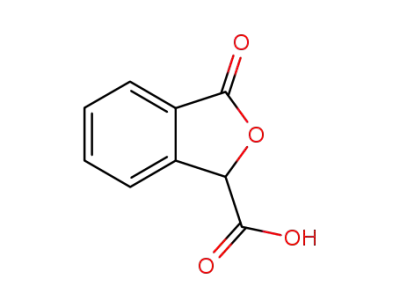
phthalide-3-carboxylic acid
| Conditions | Yield |
|---|---|
|
Produkt 5:Hydrindantin;
|
485-47-2 Upstream products
-
623-11-0
1-methyl-4-nitrosobenzene
-
605-37-8
isonaphthazarine
-
3674-33-7
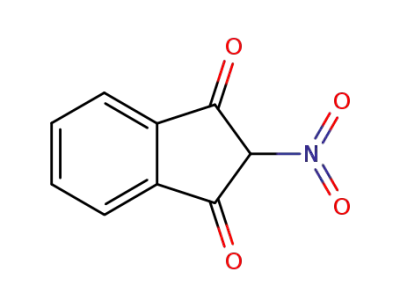
2-nitro-1,3-indanedione
-
60130-82-7
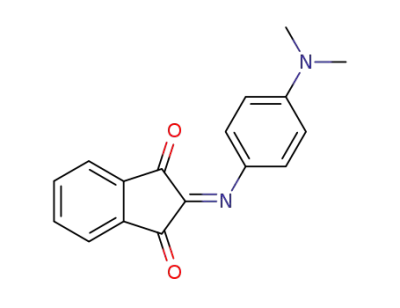
2-(4'-dimethylaminophenylimino)-1,3-indanedione
485-47-2 Downstream products
-
75-07-0

acetaldehyde
-
5103-42-4

hydrindantin
-
296800-92-5
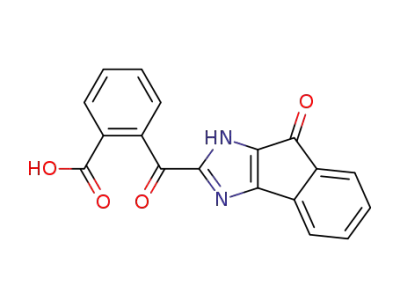
2-(8-oxo-1(3) ,8-dihydro-indeno[1,2-d ]imidazole-2-carbonyl)-benzoic acid
-
30511-21-8
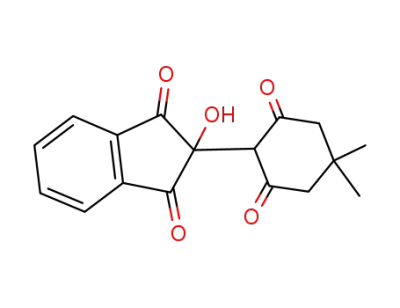
2-hydroxy-2-(4,4-dimethyl-2,6-dioxocyclohexane-1-yl)-1H-indene-1,3(2H)-dione
Related Products
-
 Silsesquioxanes
CAS:67763-03-5
-
coal, anthracite
CAS:8029-10-5
-